Some of my various fans have asked about my creative process and how I go about writing a song.
I get my inspiration from various places and ideas as my song titles might suggest. Many times I’m inspired by other artists, although I try hard to not end up copying what they’ve done. For example, my song Everything was inspired by the Moody Blues’ Nights in White Satin, which in its time was groundbreaking for using a full symphonic orchestra as part of a rock song. In the case of Everything, I also wanted to challenge myself to see if I could compose an orchestral introduction and accompaniment for the song. I did not find it a very easy endeavor, but I’ll let the results speak for themselves.
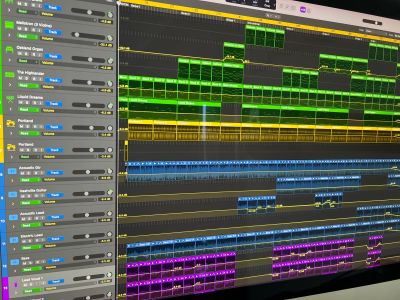
Typically, a musical riff or motif begins my thought process, and I usually capture these as pieces of ideas in my Logic Pro DAW. Sometimes I explore them further at the time but usually they sit there for awhile “incubating.” I go back periodically and review these to see if they inspire further ideas. Not every idea survives. A few of my melodies have come to me fast, and I can have a basic song in near final form in a day or two. Others take weeks or months to reach a mature stage. It just depends on when inspiration strikes. When it does, I’ll flesh out a draft song with added instrumentation and start to lay out the overall flow for verses, choruses, bridges and/or transitions. Many times I end up with a completely different feel from the motif I started with.
Some song instrumentation manifests quickly but most of the time I end up throwing out many tracks as the song evolves. For example, a track or two to set the beat rate or rhythm gets deleted once I begin putting in the “real” instrumental tracks. In other cases, I may change synthesizer selections to change the feel of a song, or vary the keyboard tracks between different organs or pianos. As to the guitar tracks, I replace any initial placeholder tracks (usually a bass line and maybe a rhythm track) from the software with my actual guitar playing once there is a structure and rhythm in the song to follow. The only software instrumentation I fully rely on is for the drummer and percussion, since actually playing drums is not my forte. However, I can handle a tambourine or cowbell without a problem!
Along the way, lyrics or song title ideas may pop up. These come from my life experiences, ideas about different themes, or something I’ve read or heard about. When I get an interesting idea in my head I try to write it down even when I have no song for it to go into yet. When I have some lyrics forming is when I usually revisit a musical composition and start pulling the two pieces together. Some songs come quick. For example, the lyrics for Voices In The Clouds came to me in an hour or two during a flight to Colombia returning from the United States. Other times, I have had mental blocks for finding lyrics that fit with a particular melody and arrangement, and a melody might be laying around for months waiting for the lyrics to come. My song Obsolescent Days was one where the melody waited quite awhile while I struggled with how to describe the perceived feelings of “obsolescence” after retirement, but still finding life meaningful and fulfilling.
Getting my vocal tracks as good as I can is a constant struggle for me. Beyond doing some basic vocal exercises, I don’t have any formal vocal training and don’t consider my voice to be that great. Many times I have to accept in my own view that what I’ve recorded is as good as I am going to do on my own even though my expectations are higher. In most of my songs, I will double or triple track my lead vocals which helps smooth out individual imperfections and brings more consistency in how the vocals sound. Harmony vocals work much the same way; individually they might not sound so great but they sound cohesive when mixed together.
I usually record vocals in segments since I cannot hold my voice in tune for extended periods. For every 8 or 16 beat segment, I have between 3-6 loops captured in order to find one with the best pronunciation and tuning. Since I use an interior room for my vocal “studio”, I also have to depend on when I can do my vocal recording for minimizing outside noises, the quality of my voice that day (hoarse, scratchy, or whatever), and sufficient time for capturing the lyrics with the same vocal quality from verse to verse. Vocal tracking is normally the last step in my recording process, after which I spend time reviewing the mix, applying equalization and reverb/delay effects, and balancing things to get to the final product.
There you have it. I am not a professional at any of this but I’ve learned a lot over the several CDs that I’ve published. As long as ideas for songs and melodies keeping popping up in my head, I’ll keep working on new material for people to enjoy.